
Industry
Energy / Digital Infrastructure
Field of Work
Development of System-compatible Data Center Locations
Project Scope
MVP-ready within approximately 3 months (pre-study including location, network, and EE assessment)
Initial Situation
The growing demand for data center capacity is colliding with limited grid capacity, volatile power generation from wind and solar, and increasing requirements for sustainability, resilience, and local value creation. Small and medium-sized data centers in particular, as well as new decentralized concepts, require integrated solutions that consider energy supply, grid connection, and regulatory compliance from the outset.
Objective
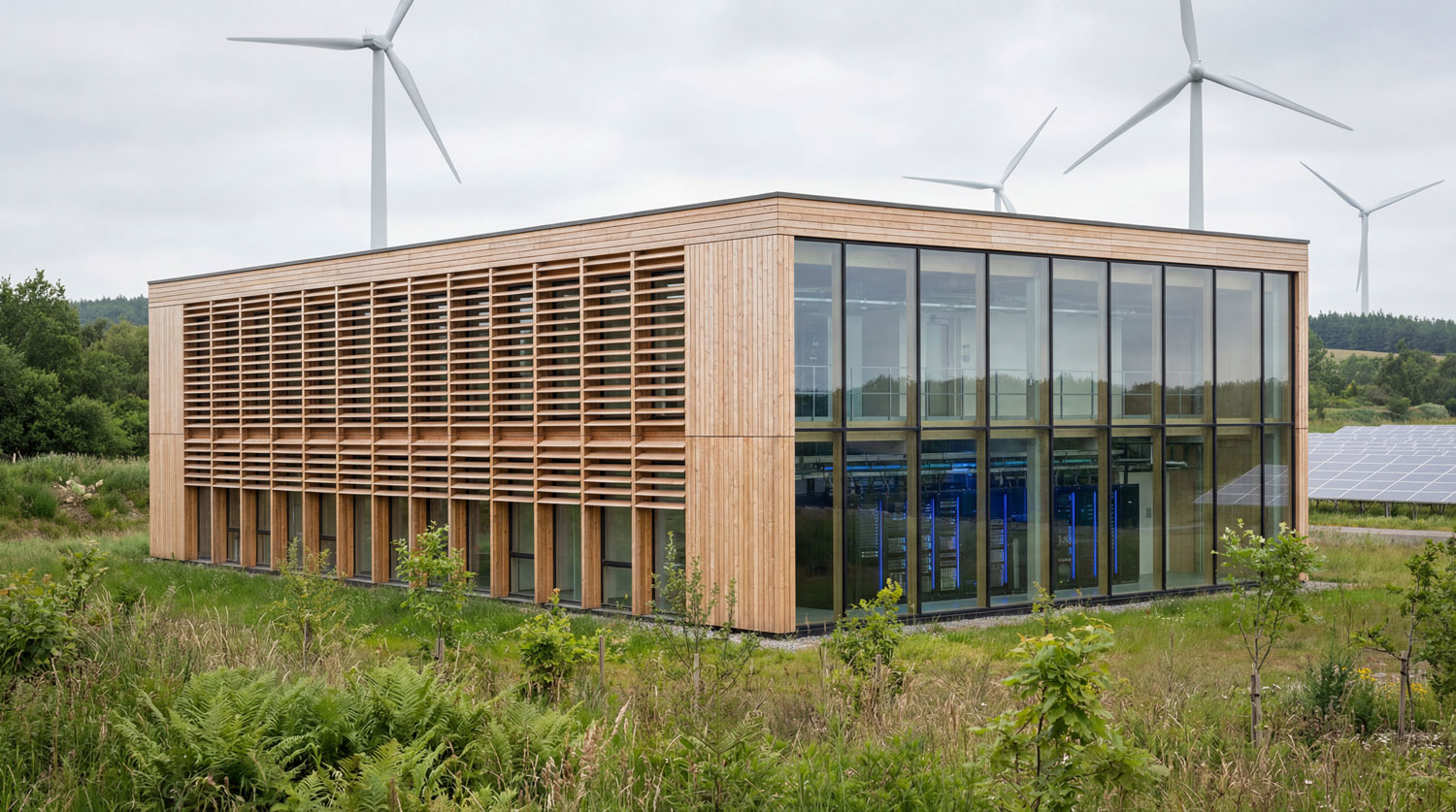
We develop data center locations as integrated energy and infrastructure projects. Data centers, renewable energies (especially wind and photovoltaics), and battery storage are planned together from the outset. The goal is a fully approved, investor-ready, and ready-to-build location package.
Storage plays a central role in this: it reduces power peaks at the grid connection, increases the usable share of renewable energies, and improves the system utility of the site.
The Use Case at a Glance
The solution uses modern AI and machine learning models to accurately predict energy consumption and generation patterns. It takes into account internal and external factors such as weather, holidays, industrial production, and price developments.
The platform helps energy suppliers dynamically adapt their production, storage, and procurement strategies to current demand and actively manage peak loads.
Data center + storage + renewable energies
- Development of data centers in various sizes Decentralized: from approx. 2 MW IT capacity, scalable to 4 MW Scaling perspective: modular expansion up to larger campus structures
- Land requirements for decentralized locations: approx. 7,500–10,000 m²
- Modular construction with short implementation time (shell construction within a few weeks)
- Designed for high energy efficiency (PUE approx. 1.1)
- Complete development up to preliminary building approval, including all necessary permits
Key Technical Data (Example of a Decentralized Data Center)
IT power: 2 MW, scalable to 4 MW
Electrical connection:
- Medium voltage 10–20 kV
- Dual feed, path redundant
- Initial capacity 4 MW, expandable to 8 MW in the future
Fiber optic connection:
- Geo- and route-redundant via at least two independent routes
- Bandwidths up to 100 Gbit/s, scalable
Building:
- Height approx. 12 m plus technical superstructures
- Expansion areas already taken into account in the layout
Integration of Renewable Energies & Storage
- Optional direct connection to wind or PV plants in the regional environment (e.g., within a radius of approx. 5 km)
- Alternatively: long-term offsite PPA structures
Battery storage for: - Reducing peak loads
- Increasing self-consumption of renewable energies
- Stabilizing the grid connection point
Waste Heat Utilization as additional added Value
The waste heat from the data center is actively integrated into the site development:
Temperature level: 50–55 °C
Waste heat quantity:
- 8 million kWh per year with 2 MW IT power
- Doubling possible with expansion to 4 MW
Suitable for:
- Feed-in to local heating networks
- Supply to public buildings or businesses
Area for heat transfer station: approx. 60–200 m² planned on the property

Our Approach
Phase 1: Location analysis & pre-study
- Review of building regulations, land availability, and development
- Analysis of grid connection, expansion prospects, and redundancy
- Evaluation of wind and solar options, including storage potential
- Rough profitability and scaling analysis
- Establishment of a project company and targeted investor involvement
Phase 2: Project development up to preliminary building permit
- Management of all approval processes
- Development of the overall technical concept
- Structuring of operator and financing models
- Handover of a fully approved project ready for construction

Added Value for Customers and Regions
For Operators and Investors
- Significantly reduced development and approval risks
- Faster market launch thanks to construction-ready sites
- Predictable energy and grid costs
- Compliance with high ESG and sustainability requirements
For Networks and Municipalities
- System-friendly integration of renewable energies
- Reduction of grid bottlenecks
- Local waste heat utilization and regional value creation
Conclusion
We do not develop data centers in isolation, but as an integrated part of the energy system. The combination of renewable energies, storage, waste heat utilization, and approval-ready project development results in sustainable, scalable, and economically robust data center locations—from the initial site analysis to the preliminary building permit.
Future-proofing your company


